
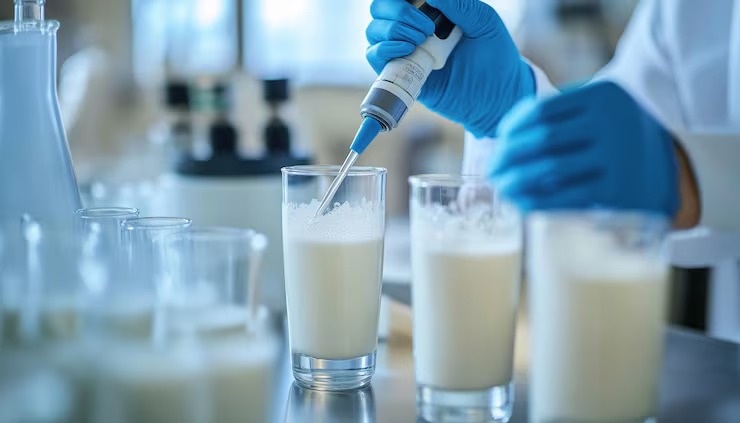
Ensuring the safety, consistency, and nutritional integrity of dairy products is a top priority for food manufacturers, processors, and quality assurance teams. Milk and milk-derived ingredients are widely used across beverages, infant formulas, nutritional supplements, cheeses, yogurts, and baked goods. Because proteins are central to milk’s functional and nutritional value, accurate testing is essential. Milk protein analysis services play a critical role in helping organizations meet regulatory requirements, maintain product quality, and protect consumer trust.
This article provides a comprehensive overview of how professional milk protein analysis supports quality control programs, why it matters across the dairy supply chain, and what manufacturers should look for when selecting analytical services.
Understanding Milk Proteins and Their Importance
Milk contains a complex mixture of proteins, primarily divided into caseins and whey proteins. Caseins account for roughly 80% of total milk protein and are essential for cheese production and texture. Whey proteins, including beta-lactoglobulin and alpha-lactalbumin, contribute to nutritional value, solubility, and functional properties in beverages and supplements.
Any variation in protein composition—whether from raw milk quality, processing conditions, or storage—can directly impact taste, texture, shelf life, and nutritional labeling. This is why robust Milk Protein Analysis (used once only) is a cornerstone of modern dairy quality control.
Why Milk Protein Analysis Is Essential for Quality Control
1. Regulatory Compliance
Food safety regulations and labeling laws require manufacturers to accurately declare protein content and allergen information. Analytical testing verifies that products meet national and international standards, reducing the risk of recalls or compliance violations.
2. Product Consistency
Variations in protein levels can lead to batch-to-batch inconsistencies. Reliable testing helps manufacturers maintain uniformity in texture, flavor, and appearance, which is critical for brand reputation.
3. Nutritional Accuracy
Protein claims on packaging must be supported by validated analytical data. Accurate measurement ensures consumers receive the nutritional value promised on the label.
4. Allergen and Adulteration Detection
Milk proteins are major allergens. Testing confirms the presence, absence, or concentration of specific proteins, helping manufacturers manage cross-contamination risks and detect adulteration with non-milk proteins.
Common Analytical Techniques Used in Milk Protein Testing
Professional laboratories employ a range of validated methods depending on the product type and testing goals:
Electrophoresis-Based Methods
Techniques such as SDS-PAGE allow for separation and visualization of individual milk proteins. These methods are valuable for assessing protein profiles, detecting degradation, and comparing raw and processed samples.
Chromatographic Techniques
High-performance liquid chromatography (HPLC) is widely used to quantify specific proteins with high sensitivity and reproducibility.
Immunological Assays
ELISA-based methods are often applied for allergen detection or targeted protein quantification, especially in complex food matrices.
Spectroscopic and Chemical Methods
Total protein content may be measured using established chemical assays that support nutritional labeling and routine quality checks.
Each method provides unique insights, and experienced laboratories often combine multiple approaches for comprehensive analysis.
Applications Across the Dairy and Food Industry
Milk protein analysis services support a wide range of applications, including:
- Raw milk quality assessment to evaluate supplier consistency
- Process validation during pasteurization, drying, or fermentation
- Finished product testing for labeling and release approval
- Shelf-life studies to monitor protein stability over time
- Research and development for new dairy and functional food products
These services are not limited to traditional dairy products. Plant-based blends, hybrid formulations, and high-protein nutrition products also benefit from precise protein characterization.
The Value of Independent Third-Party Laboratories
Using an independent analytical laboratory adds credibility and objectivity to quality control programs. Third-party testing ensures unbiased results, validated methods, and proper documentation that can withstand regulatory audits or customer reviews.
Midway through quality planning and validation efforts, many manufacturers reference trusted external resources and laboratory expertise, including https://kendricklabs.com/, to better understand available testing capabilities and analytical approaches.
Key Benefits of Outsourcing Milk Protein Analysis
- Expertise and specialization in complex protein testing
- Access to advanced instrumentation without capital investment
- Validated, reproducible methods aligned with industry standards
- Detailed reporting to support audits, investigations, and product claims
Outsourcing also allows internal teams to focus on production and innovation while ensuring analytical accuracy is handled by specialists.
Choosing the Right Milk Protein Analysis Service Provider
When selecting a laboratory partner, manufacturers should consider:
- Experience with dairy and food protein matrices
- Availability of multiple analytical techniques
- Clear communication and transparent reporting
- Turnaround times that align with production schedules
- Compliance with quality systems and regulatory expectations
A reliable partner will not only provide test results but also help interpret data and support quality decision-making.
Learn More About Specialized Food and Nutrition Testing
For organizations seeking deeper insight into food and nutrition-related protein analysis, additional information on specialized testing services is available through Learn More
This resource outlines analytical capabilities that support dairy quality control, nutritional validation, and research needs.
Supporting Quality, Safety, and Consumer Confidence
Milk protein analysis services are a vital component of modern quality control strategies. By delivering accurate, reproducible data, these services help manufacturers ensure regulatory compliance, maintain consistent product quality, and protect consumers with reliable nutritional information.
As dairy products continue to evolve—incorporating new processing technologies and nutritional innovations—the role of precise protein analysis will only become more important. Partnering with experienced analytical laboratories ensures that quality and safety remain at the forefront of dairy production.
Contact Us
For organizations seeking professional guidance, validated testing, or customized analytical support, Contact Us to discuss specific milk protein analysis needs:
Working with experienced specialists helps ensure that every product meets the highest standards of quality, safety, and integrity.